




New Publication: Long-term warming and marine heatwave trends in the Mediterranean Sea

A new study titled “Insights into sea surface temperature variability and the impact of long-term warming on marine heatwaves in the Mediterranean Sea” has been published in the 9th edition of the Copernicus Ocean State Report. The work was carried out by Dimitra Denaxa and Gerasimos Korres (HCMR), together with Sofia Darmaraki (FORTH) and Maria Hatzaki (NKUA).
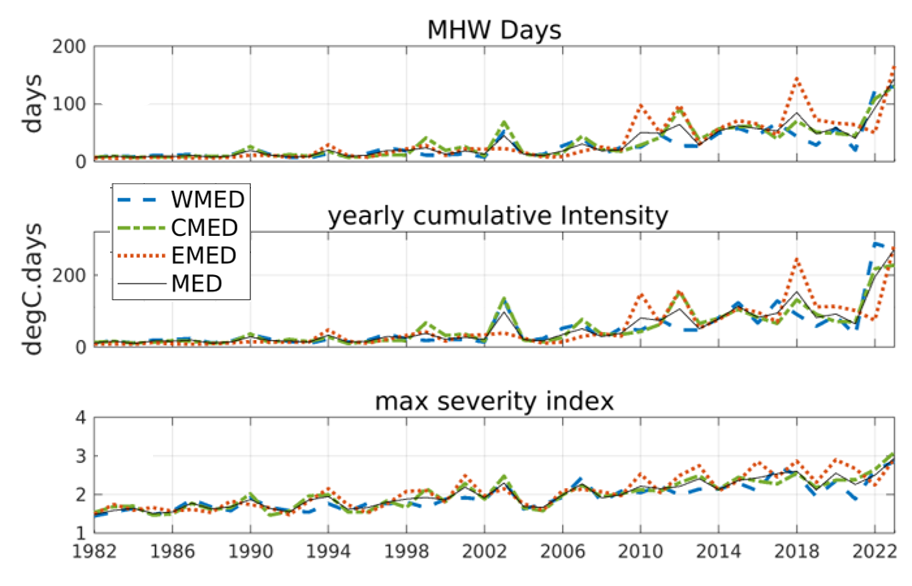
The study analyzes satellite-based sea surface temperature (SST) records from 1982 to 2023, examining long-term warming patterns in the Mediterranean Sea and their impact on marine heatwave (MHW) trends.
Key insights:
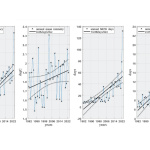
- Long-term surface warming: The Mediterranean Sea has experienced a clear warming trend over the last four decades, averaging 0.41°C per decade. The strongest warming appears in Eastern basin, reaching locally ~0.6°C per decade.
- Intensification of extreme SST events: Extremely warm surface conditions (in terms of extreme SST percentiles) show increasing trends across the basin.
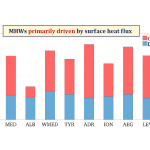
- Origin of MHW trends: The mean warming dominates interannual variability in causing higher maximum MHW intensities, more extreme MHWs, longer heat exposure, as well as a greater accumulation of heat stress throughout the basin. However, interannual variability becomes the dominant driver of the mean MHW intensity trends.
- Regional vulnerability: The study highlights that the Adriatic, Aegean and northern Levantine Seas are the most vulnerable Mediterranean areas, both in terms of accumulated warming and exposure to extreme temperatures, and may therefore face increasing sensitivity to extreme warming conditions in the future. The eastern basin experiences more extreme events rel. to historical conditions and faster increase in ecosystem-relevant MHW properties compared to the rest of the basin.
Understanding how long-term warming and interannual variability shape the behaviour of marine heatwaves is essential for understanding and anticipating changes in the Mediterranean Sea. The study highlights sub-basins that may be more exposed to future heat stress, with implications for marine ecosystems, fisheries and coastal management.
Access the publication here!
Denaxa, D., Korres, G., Darmaraki, S., and Hatzaki, M.: Insights into sea surface temperature variability and the impact of long-term warming on marine heatwaves in the Mediterranean Sea, in: 9th edition of the Copernicus Ocean State Report (OSR9), edited by: von Schuckmann, K., Moreira, L., de Pascual Collar, Á., Grégoire, M., Brasseur, P., Garric, G., Karstensen, J., Lionello, P., Marcos, M., Poulain, P.-M., and Staneva, J., Copernicus Publications, State Planet, 6-osr9, 10, https://doi.org/10.5194/sp-6-osr9-10-2025, 2025.